When exploring LED technology, a crucial question arises: "What is the difference between DIP and SMD LED?" As LED lighting becomes a standard in various applications, understanding these differences is essential for both consumers and professionals. According to Dr. Emily Carter, a leading expert in LED technology, “DIP LEDs provide robust reliability, while SMD LEDs excel in efficiency and slim profiles.”
DIP (Dual In-line Package) LEDs are known for their durability and ability to withstand harsh environments. They are often used in applications where reliability is paramount, like automotive lighting or signage. On the other hand, SMD (Surface-Mounted Device) LEDs are designed for compact spaces. Their small size allows for innovative lighting solutions in modern electronics.
While both technologies serve their unique purposes, the debate on efficiency and application continues to evolve. It can be challenging to choose the right LED type without the proper information. As industries progress, the ongoing conversation about "What is the difference between DIP and SMD LED?" invites reflection and deeper understanding of these technologies.
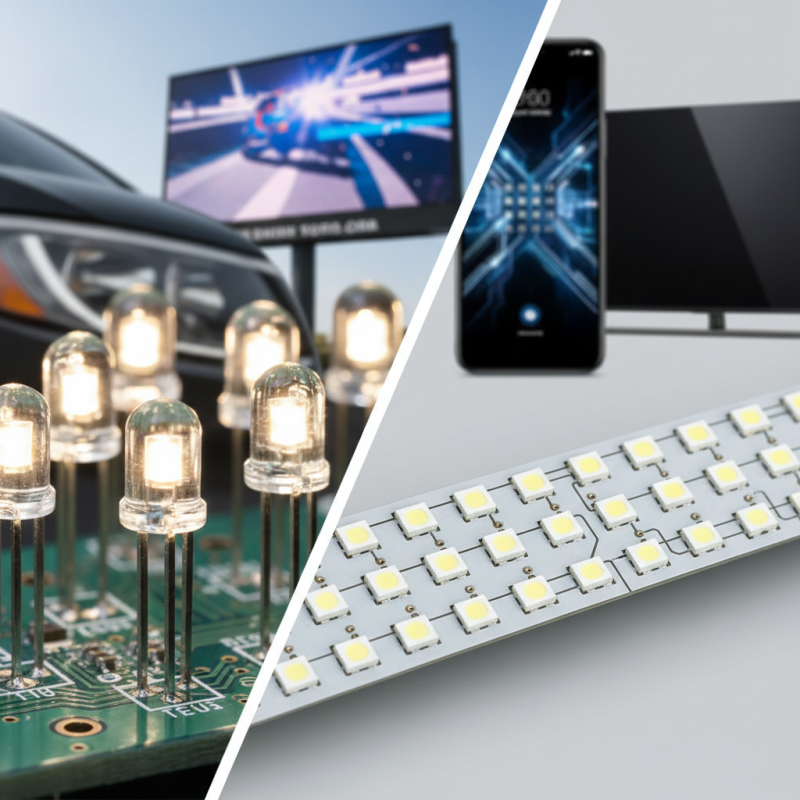
DIP (Dual In-Line Package) and SMD (Surface Mount Device) represent two distinct LED technologies. Their structural differences significantly affect performance and application. DIP LEDs feature a classic design with two leads extending from a bulb. The internal components are housed within a plastic case, providing durability. This setup is ideal for applications requiring straightforward, visible indicators. However, the bulkier form factor can limit their use in compact designs.
In contrast, SMD LEDs are designed for surface mounting. They consist of tiny chip components soldered directly to a circuit board. Their compact size allows for versatile applications, including complex electronic devices. SMD technology enables greater pixel density and can produce vivid displays. This suitability for high-resolution needs brings an obvious advantage. However, the intricate placement requires precise manufacturing techniques, which can complicate assembly.
Both technologies have their shortcomings. DIP LEDs are easier to replace but often lack the efficiency of SMD models. SMD LEDs provide high performance but may be more challenging to manage during repairs. Designers must weigh these trade-offs based on specific project requirements. Understanding these nuances helps in making informed choices tailored to individual needs.
When comparing DIP and SMD LED technology, performance metrics stand out. Luminous efficiency is a crucial factor. DIP (Dual In-line Package) LEDs typically have lower luminous efficiency. They emit less light per watt compared to SMD (Surface Mount Device) LEDs. This difference can impact energy savings significantly in large-scale applications.
Power consumption levels also reveal distinct variances. SMD LEDs often consume less power for the same brightness output. Their design allows for better heat dissipation, resulting in higher performance reliability. Conversely, DIP LEDs can overheat, leading to potential failures. This inconsistency raises concerns in long-term use.
Yet, not everything is perfect. While SMD LEDs are more efficient, they can be more sensitive to manufacturing variances. This can affect performance consistency. Additionally, the initial investment for SMD technology may be higher. Users need to weigh these considerations carefully.
DIP (Dual In-line Package) and
SMD (Surface-Mount Device) LEDs
each have unique application areas that cater to different needs. DIP LEDs
are typically utilized in environments where visibility and reliability are paramount. Common applications include
outdoor signage and large display boards. These LEDs emit bright light, making them ideal for daylight viewing.
They are often used in applications like traffic lights and indicator lights due to their robustness.
On the other hand, SMD LEDs excel in compactness and
versatility. Their small size allows for dense arrangements on circuit boards. This makes them perfect for modern
electronic devices, such as smartphones and televisions. SMDs can produce various colors and brightness levels,
adapting to different aesthetic needs. They are often chosen for indoor lighting solutions and decorative features.
However, while SMDs offer design flexibility, their
smaller size can complicate handling and installation compared to the bulkier DIP LEDs.
The choice between DIP and SMD LEDs
depends on specific requirements. Considering factors like space constraints, visibility, and brightness is crucial.
Both DIP and SMD technologies have transformative impacts in many sectors, illustrating the balance between
traditional and modern LED applications.
When comparing DIP and SMD LED technologies, a critical aspect is their cost implications. Initially, DIP (Dual In-line Package) LEDs often have a lower upfront investment. They are quite inexpensive due to simpler manufacturing processes. However, this lower cost comes with a trade-off in efficiency and lifespan. Reports indicate that while DIP LEDs may cost around $0.50 per unit, their average lifespan is about 25,000 hours.
On the other hand, SMD (Surface Mounted Device) LEDs command higher initial prices, averaging $1.00 to $1.50 per unit. Yet, they outperform DIP LEDs in efficiency and longevity, often reaching up to 50,000 hours of use. A study by the Lighting Research Center highlights that SMD LEDs can save up to 40% on energy costs over their lifespan. Long-term savings often outweigh the initial investment, particularly in commercial applications.
Maintenance should also be considered. DIP LEDs need more frequent replacements, resulting in higher labor costs. SMD LEDs, with their longer life, require less maintenance. A cost analysis reveals that, over 10 years, SMD solutions may yield savings of up to $5,000 in a mid-sized facility. This significant difference in long-term savings makes SMD LEDs a more viable option despite their higher upfront costs.
The adoption rates of DIP (Dual In-line Package) and SMD (Surface Mount Device) LEDs vary significantly across different industries. DIP LEDs are often favored for applications requiring robust durability. They are widely used in outdoor signage and automotive displays due to their resilience against environmental factors. Conversely, SMD LEDs are gaining traction in consumer electronics, where space-saving designs are critical. Their compact size allows for a more efficient use of circuit space, leading to innovative product designs.
Industry preferences indicate a shift toward SMD technology. Many companies value the energy efficiency and versatility of SMD LEDs. However, this shift also poses challenges; manufacturers must adapt production processes and training for new technology. Some industries still hesitate to transition completely. This reluctance may stem from the higher initial costs associated with SMD manufacturing.
As technology evolves, the market will continue to adjust. Companies need to balance cost with performance benefits. They must also consider consumer preferences and environmental impacts when choosing between DIP and SMD technologies. The ongoing evolution in LED technology suggests a dynamic future marked by competing needs for reliability and miniaturization.
: DIP LEDs are ideal for outdoor signage and large display boards. They are used in traffic lights and indicator lights.
SMD LEDs are versatile and compact. They are commonly found in smartphones, televisions, and indoor lighting solutions.
DIP LEDs have a lower initial cost and are robust, making them suitable for environments needing visibility and reliability.
SMD LEDs can complicate handling and installation due to their smaller size compared to the bulkier DIP LEDs.
DIP LEDs typically last about 25,000 hours, while SMD LEDs can last up to 50,000 hours, indicating greater longevity.
Yes, although SMD LEDs have a higher initial cost, they can save up to 40% on energy costs over their lifespan.
DIP LEDs require more frequent replacements, increasing maintenance costs. SMD LEDs have a longer life and need less maintenance.
A mid-sized facility can save up to $5,000 by selecting SMD LEDs due to their longer lifespan and efficiency.
No, factors like lifespan, efficiency, and maintenance should also be evaluated for a complete cost analysis.
Users may overlook initial costs and long-term savings, leading to potentially higher overall expenses with more frequent replacements.
The article titled "What is the difference between DIP and SMD LED technology?" explores fundamental distinctions between these two LED types, focusing on their structural variations, performance metrics, application areas, cost implications, and current market trends. DIP (Dual In-Line Package) LEDs typically have a larger and bulkier design, making them suitable for traditional applications like indicator lights. In contrast, SMD (Surface Mount Device) LEDs boast a smaller and more efficient structure, allowing for higher luminous efficiency and lower power consumption, which makes them ideal for modern lighting solutions.
Additionally, the article discusses the long-term cost benefits of SMD technology despite higher initial investments, pointing to significant savings over time due to energy efficiency. It also reviews market trends showing a growing preference for SMD LEDs in various industries due to their versatility and performance advantages. Ultimately, understanding "What is the difference between DIP and SMD LED?" helps stakeholders make informed decisions about LED technologies for specific applications.

Sync LED